


01Safety
No work at height
The operator flies the drone from a safe distance on the ground. There is no climbing on roofs, scaffolding or lifts, and the work zone around the building is secured before the flight.
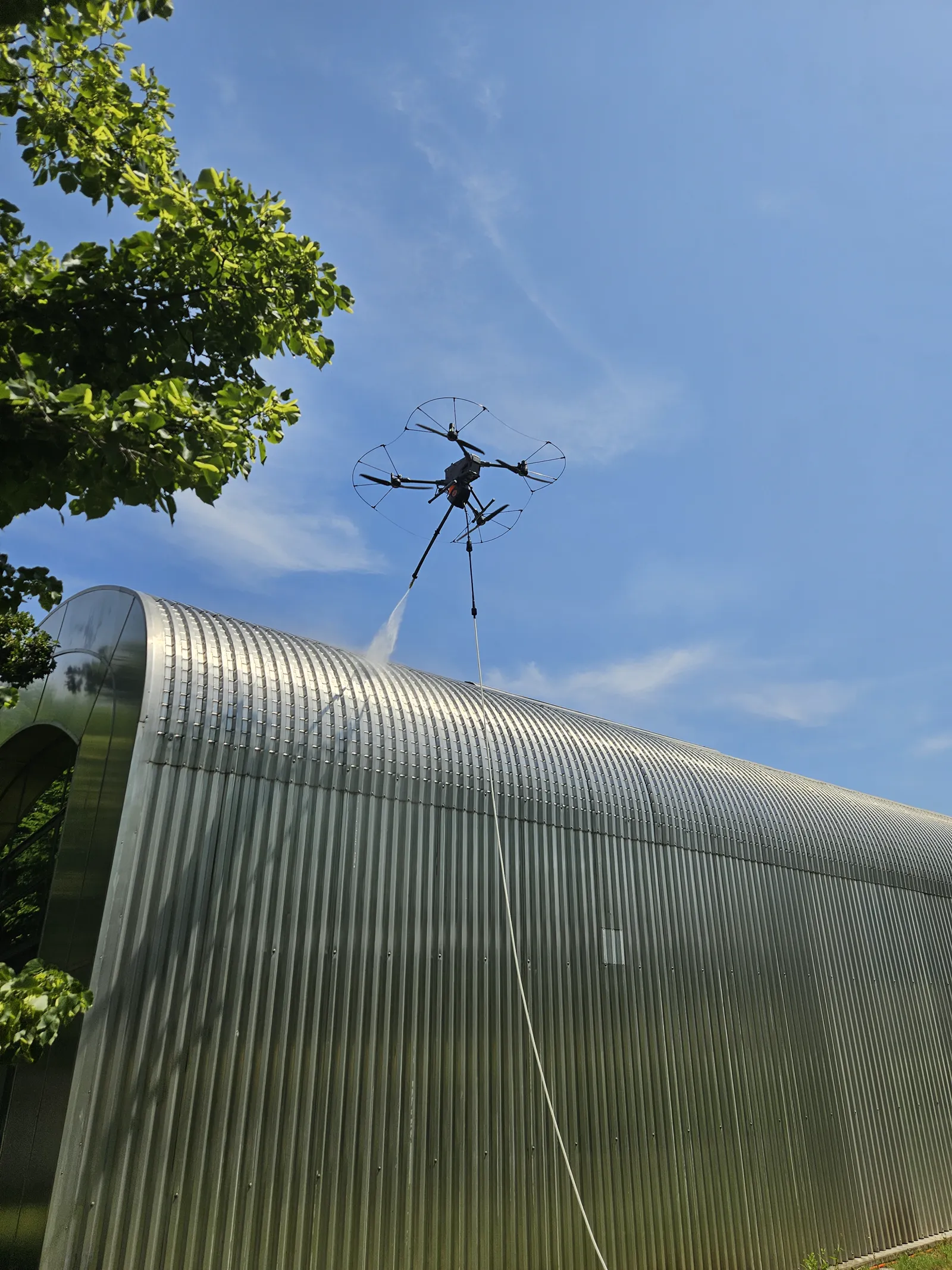
EnergizeDrone cleans facades, roofs, glass surfaces and solar panels with a drone fitted with a cleaning attachment and a water supply hose. We clean high and hard-to-reach surfaces without scaffolding, lifts or walking on panels, with pressure and method matched to the material and condition of the building.
EnergizeDrone, a brand of Energize Intelligent Solutions d.o.o. from Zagreb, cleans facades and solar panels by drone on buildings across Croatia. The drone reaches surfaces at height without scaffolding and without people working at height, so cleaning is quicker to set up and disrupts the use of the building less.
The operator flies the drone from a safe distance on the ground. There is no climbing on roofs, scaffolding or lifts, and the work zone around the building is secured before the flight.
There is no need to put up and take down scaffolding or to occupy space with a crane. Preparation is shorter, and the building can mostly be used as normal during cleaning.
We choose the pressure, nozzle distance and cleaning order according to the facade material or the panel type. We clean solar modules without stepping on them and without aggressive agents.
Before quoting we check the type of surface, the height, obstacles around the building, water availability and flight conditions. That way we know in advance which parts can be safely cleaned by drone and which should be excluded or handled another way.
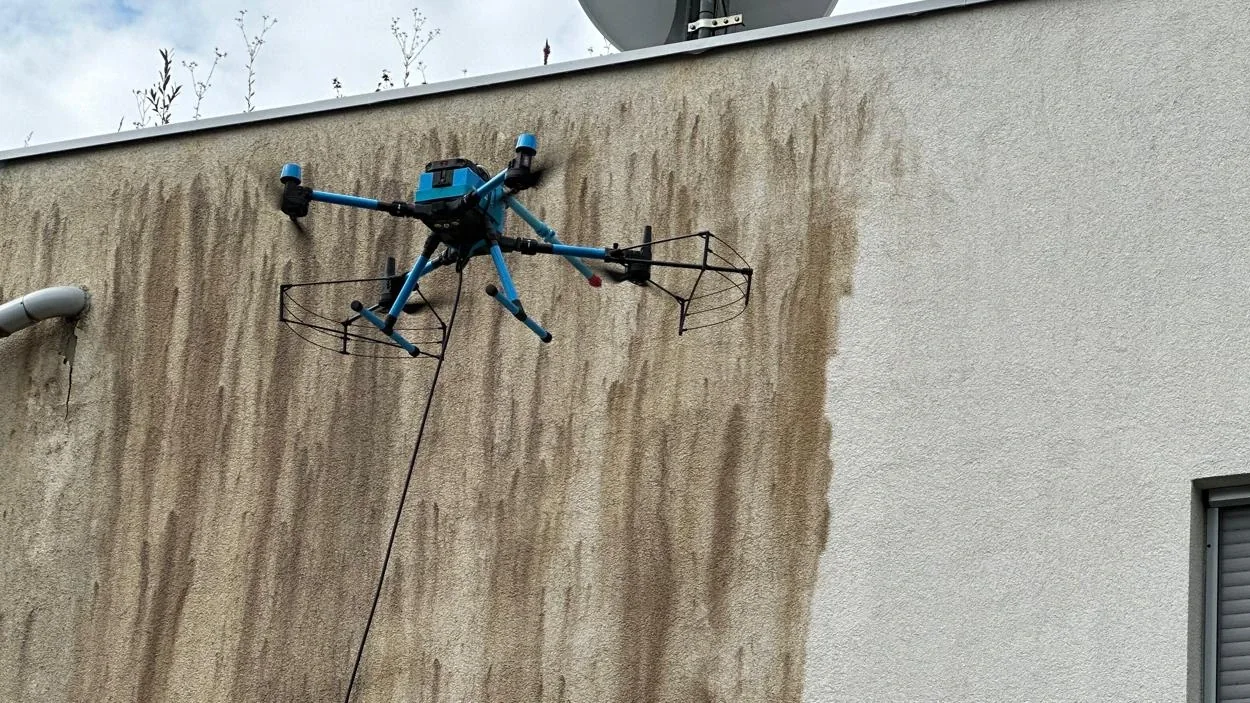 01 Application
Metal, glass, rendered and clad surfaces of commercial, residential and industrial buildings. We remove dust, deposits, moss and traces of pollution from heights that would otherwise need scaffolding or a lift.
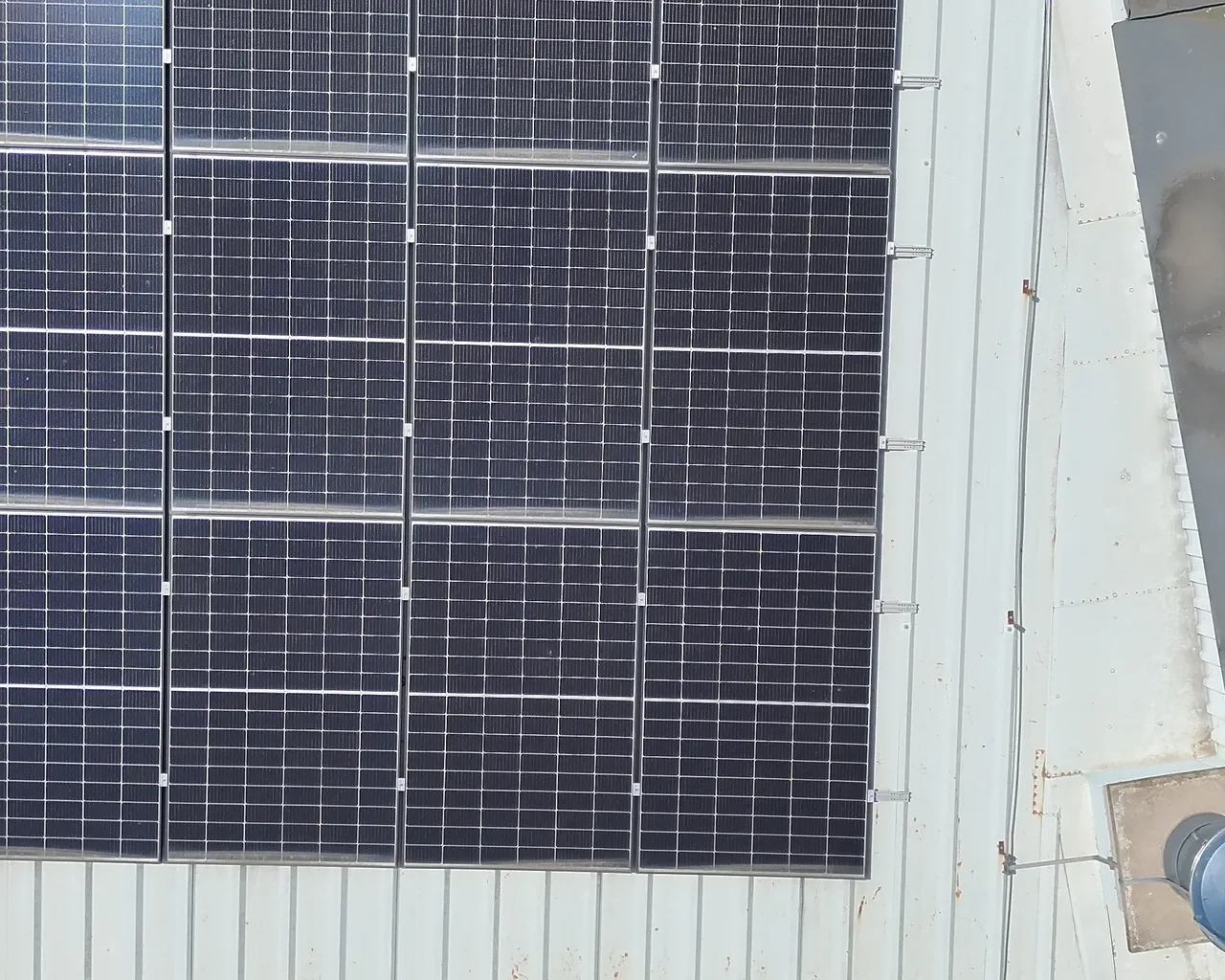 02 Application
Dirt, pollen and bird droppings reduce a plant's output. We clean rooftop and ground-mounted plants without walking on the modules, and cleaning can be combined with a thermal inspection to separate dirt from real faults.
03 Application
Flat and pitched roofs, skylights and the roofs of industrial halls and warehouses. The drone cleans surfaces that are unsafe to walk on and reduces the risk of damaging the roofing.
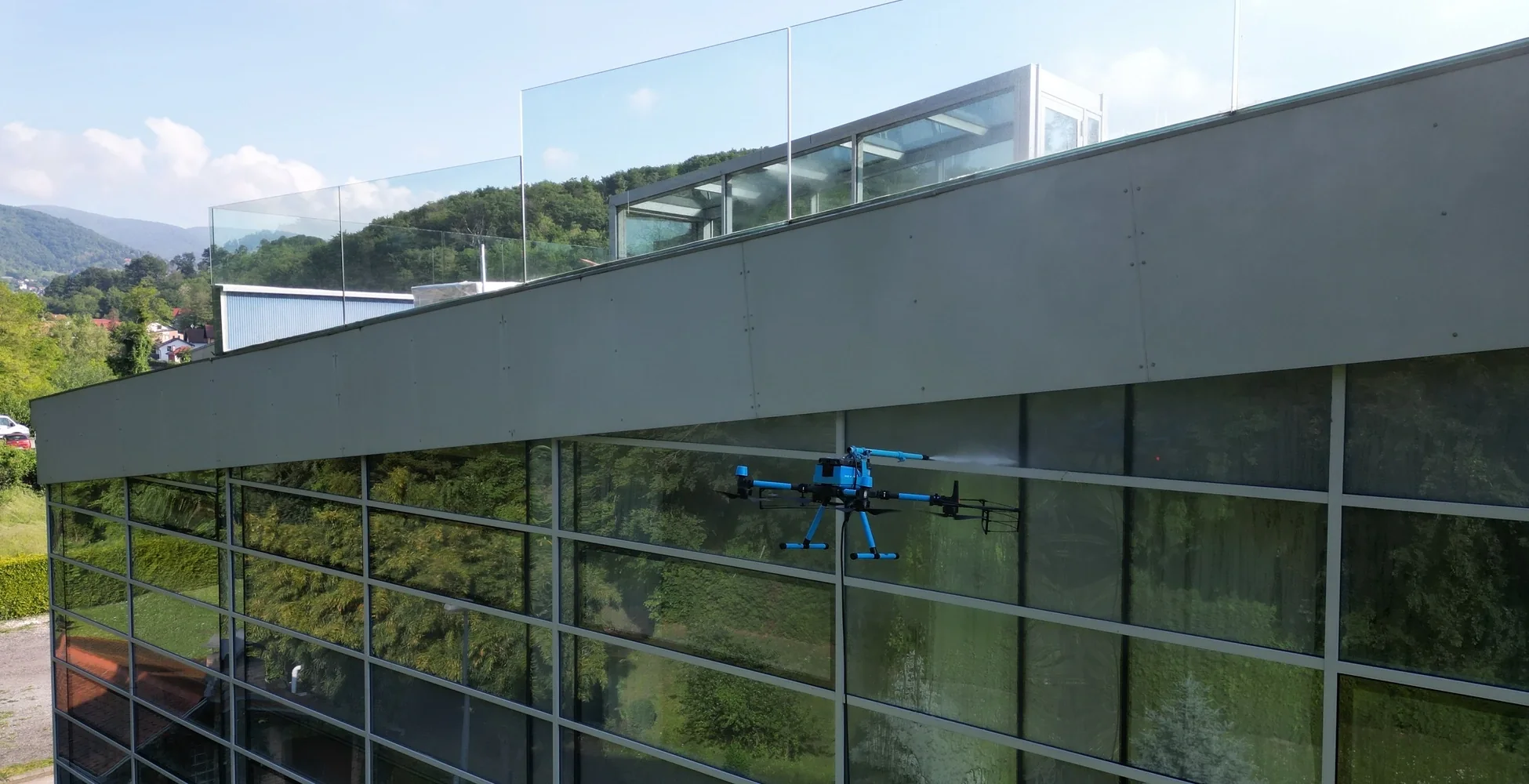 04 Application
Parts of a building above roads, car parks, canopies or green areas, where scaffolding or a lift is impractical or would require closing off the area.
The same residential facade before and after washing. Traces of air pollution, algae and run-off from the flashing were removed without scaffolding and without closing the building entrance.
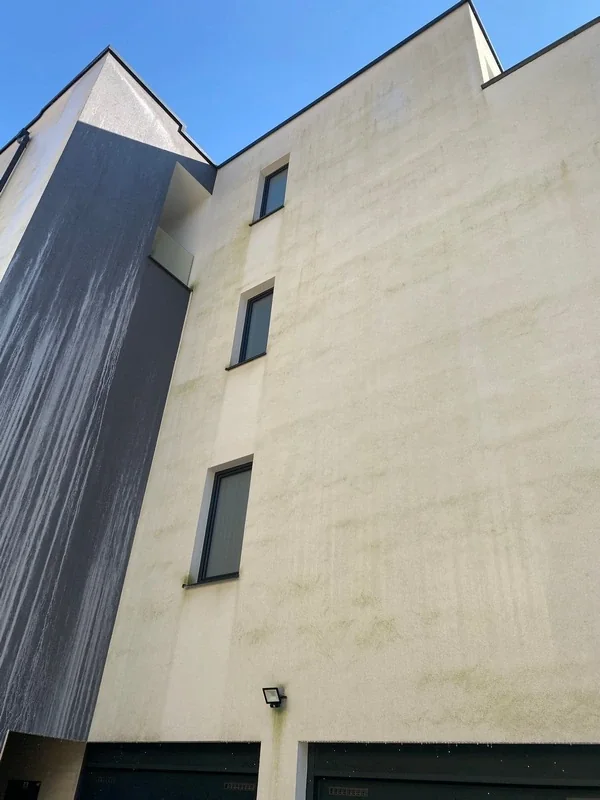
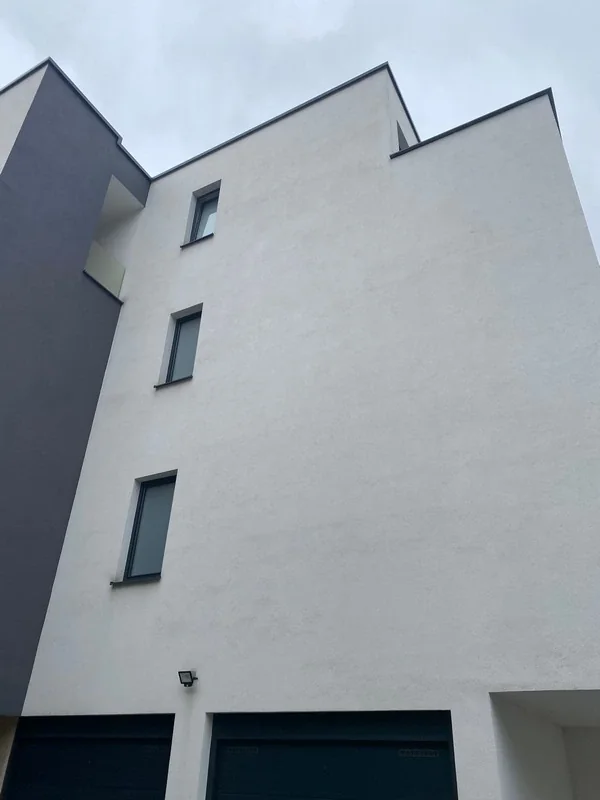
The video shows our drone with a cleaning attachment washing a metal facade. Water is supplied by a hose from the ground, and the operator guides the drone along the surface according to the cleaning plan, from top to bottom, so that cleaned areas do not get dirty again.
Propeller guards and a constant distance from the surface allow steady work close to the facade. We photograph every surface before and after cleaning so the client has proof of the work done.
We plan drone cleaning like any other flight operation: with a check of the site, airspace and safety zone. Only then do we choose the equipment, pressure and cleaning order.
We ask for the address, photos of the surface, approximate height and area, and the type of dirt. For solar plants, the number and layout of modules and the manufacturer's cleaning recommendations are useful.
We check obstacles, cables, trees, traffic and water access. Before the flight we check the airspace and the applicable CCAA rules and agree a work zone where nobody stays during cleaning.
We clean the surface systematically, from top to bottom, with pressure and distance matched to the material. Sensitive spots and any damage noticed are excluded or cleaned by special agreement with the client.
After cleaning we check the result and repeat the treatment on more demanding areas if needed. The client receives photos before and after cleaning, and for solar plants a thermal inspection can also be arranged.
In solar plants, cleaning and thermal inspection complement each other. Dirt can hide or mimic thermal anomalies, so inspecting a clean plant is more reliable, and cleaning is justified when you know how much the soiling affects output.
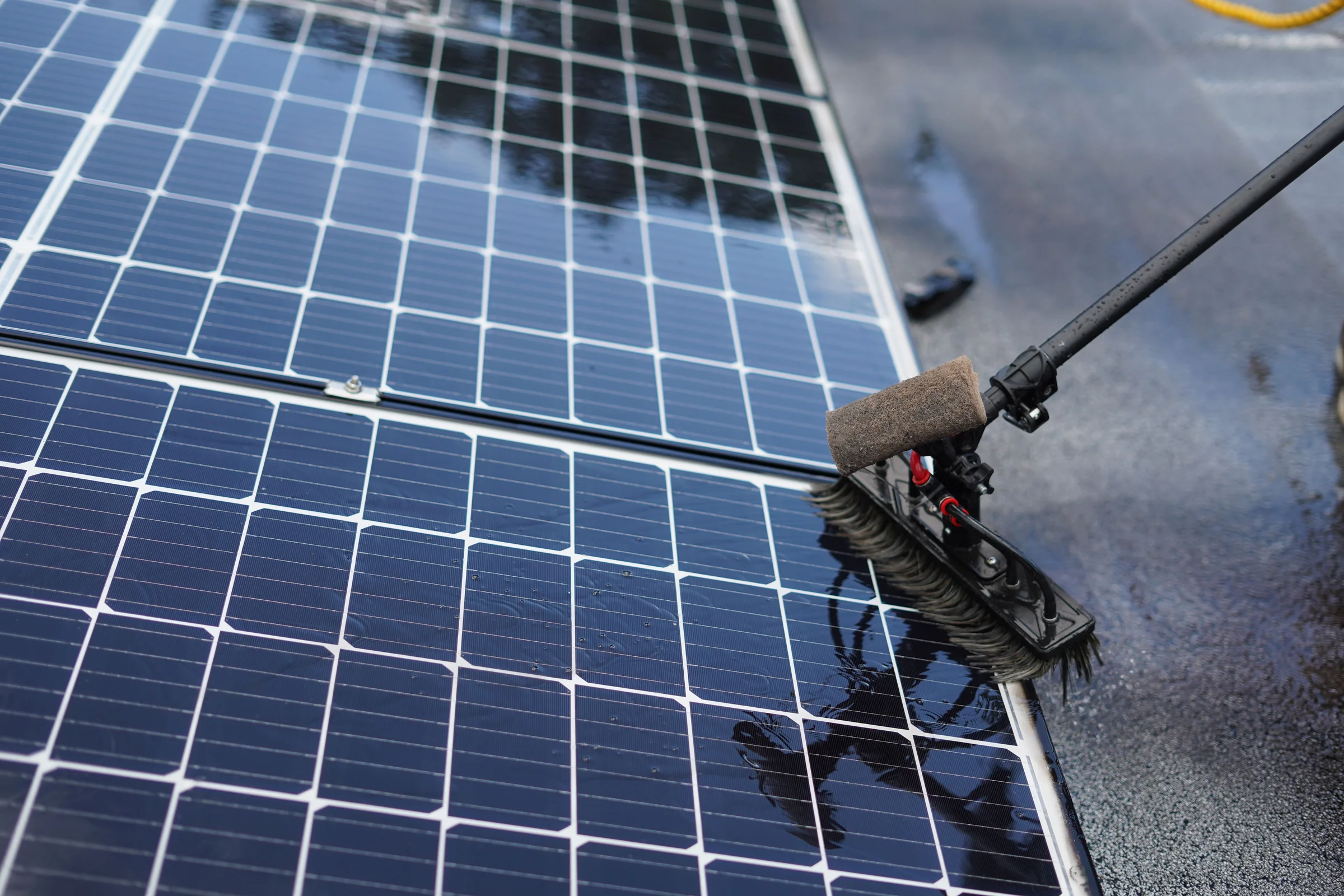
Deposits on the glass reduce the amount of light reaching the cells. Regular cleaning helps the plant run closer to its expected output.
On clean modules it is easier to tell real faults in cells, diodes or connections from warmer areas caused by dirt.
Solar plant inspectionPlants near roads, farmland or industry get dirty faster. We agree the cleaning frequency based on the condition of the modules and the location.
We set the price once we have seen the building and the surface to be cleaned. The quote states the scope, cleaning method and limitations, so the items are clear before a date is agreed.
The price depends mostly on the area and height of the building, the type and degree of soiling, the material, obstacles around the building, water availability and the need for cleaning agents. Travel costs and any regulatory procedures are listed separately.
Send the address, photos of the surface, approximate height and area, and your preferred date. For solar plants, give the capacity or number of modules. We will reply with a proposed cleaning method and quote items.
The answers describe the usual process. Exact feasibility depends on the building, the surface, the airspace and the weather.
Send another questionWe most often clean facades, metal and glass surfaces, roofs and solar panels on rooftops and in solar plants. Before quoting we check the material, height, obstacles around the building and whether a safe flight is possible, because not every site is suitable for drone work.
The drone is connected by a hose to a ground unit that supplies water to the nozzle. A water connection on site, or an arrangement to bring water, is therefore needed, and we agree this before the date.
It depends on the surface and the type of dirt. We clean solar panels with water and no aggressive agents, following the module manufacturer's recommendations. For facades we choose the agent and pressure according to the material and in agreement with the building owner.
We match the pressure, nozzle distance and cleaning angle to the material. Sensitive parts, joints and any damage we notice before work are documented and either excluded or cleaned by special agreement.
Dust, pollen, bird droppings and deposits reduce the amount of light that reaches the cells, so the plant produces less energy. Drone cleaning requires no walking on the modules and can be combined with a thermal inspection of the plant to separate dirt from real faults.
Before every flight we check the airspace, the applicable CCAA rules and the site conditions, and obtain any required approvals. During the work we secure a zone around the building where people not involved in the operation do not stay.
Tell us which surface needs cleaning, the building's address and its approximate height or area. Add photos of the facade, roof or solar plant and whether water is available on site. Based on that we will propose a cleaning method, a date and the quote items.