


01Complete survey
The whole roof and every facade
From the air, flat roofs, pitched roofs and the upper parts of facades are seen at a favourable angle, without scaffolding, ladders or climbing on the roof.

EnergizeDrone uses a drone-mounted thermal camera to inspect houses, residential buildings, commercial properties and halls. We survey roofs and facades to locate heat loss, thermal bridges, signs of moisture and possible leaks, and link every finding to an RGB frame and its position on the building.
EnergizeDrone, a brand of Energize Intelligent Solutions d.o.o. from Zagreb, carries out thermal drone inspections of buildings across Croatia. In a short time the drone captures the whole roof and every facade, including parts that cannot be seen from the ground, so the owner or building manager gets a complete picture before planning repairs or an energy renovation.
From the air, flat roofs, pitched roofs and the upper parts of facades are seen at a favourable angle, without scaffolding, ladders or climbing on the roof.
We show every anomaly next to a visual image of the same spot, so the contractor knows exactly where to check the insulation, waterproofing or joint.
Our team includes a specialist with the ITC Level I Infrared Thermography certification, who takes emissivity, reflections, weather and materials into account when planning and interpreting.
More about thermal inspectionsA thermal camera shows differences in surface temperature. When captured in the right conditions and interpreted with knowledge of the construction, those differences show where a building loses heat or where moisture is trapped in its layers.
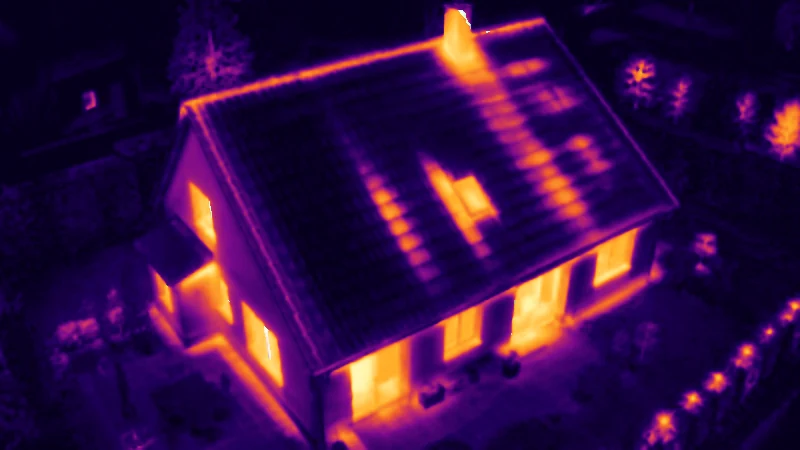 01 Application
Warmer spots on the outer surface of a roof or facade during the heating season point to areas where heat escapes from the building, for example because of insufficient, damaged or settled insulation.
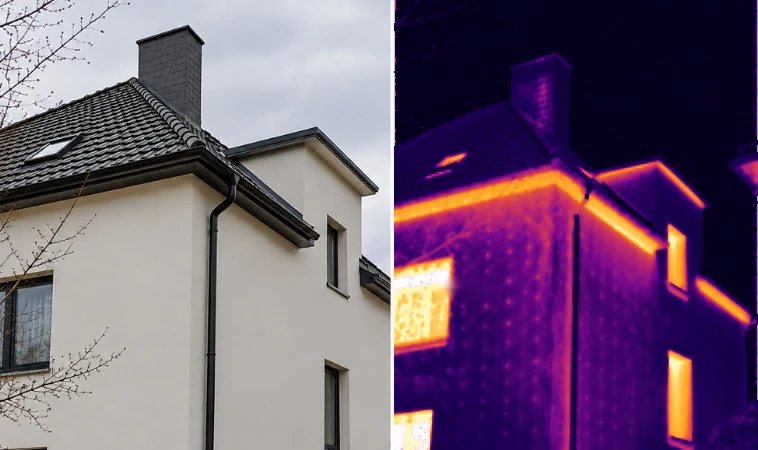 02 Application
Ring beams, balcony slabs, lintels and window joints often stand out clearly on a thermogram. The inspection helps decide where repairs are worth the investment.
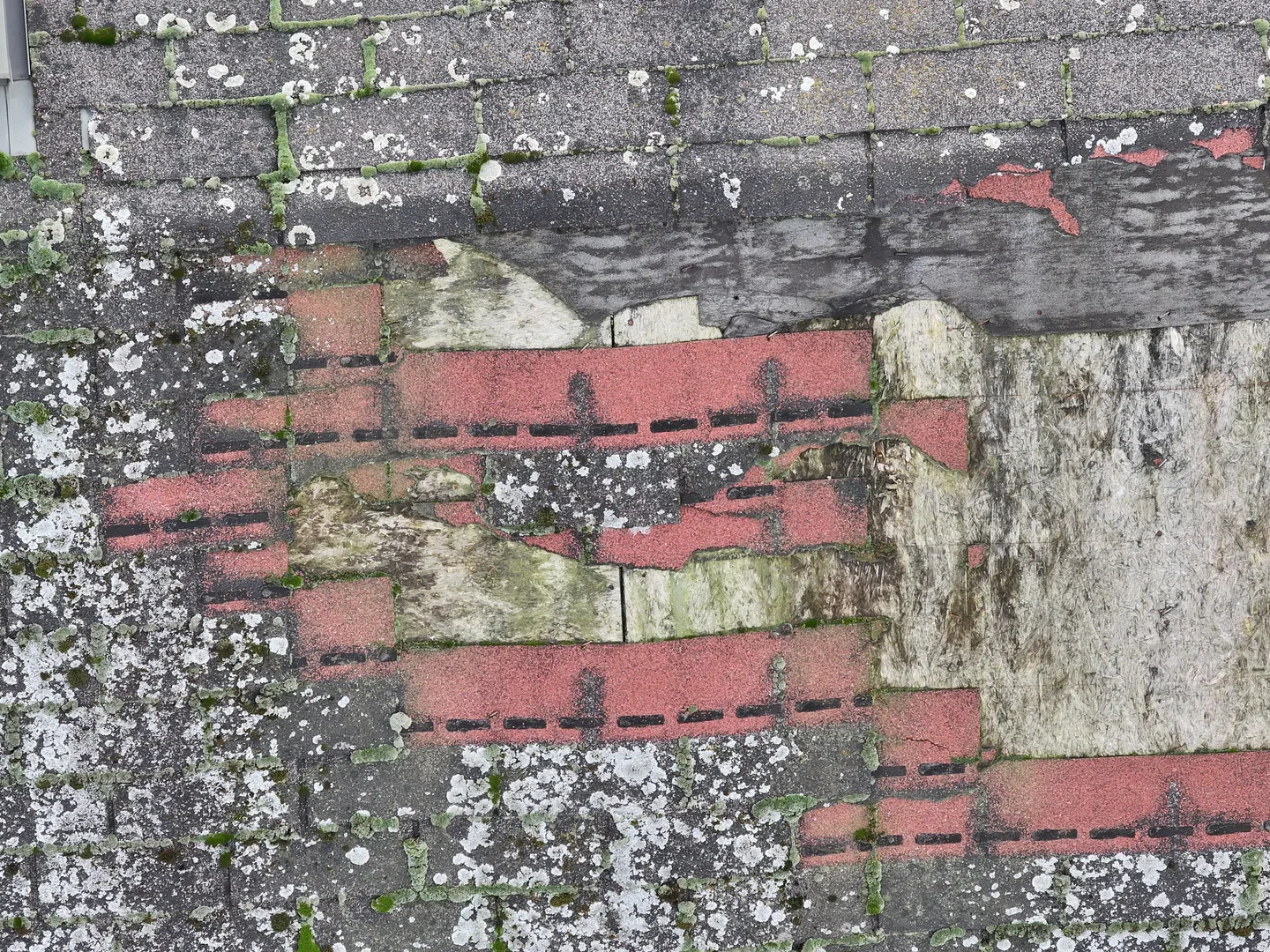 03 Application
Water trapped in the layers of a flat roof holds and releases heat differently. Surveying at the right time can narrow down the area where the point of water ingress should be searched for.
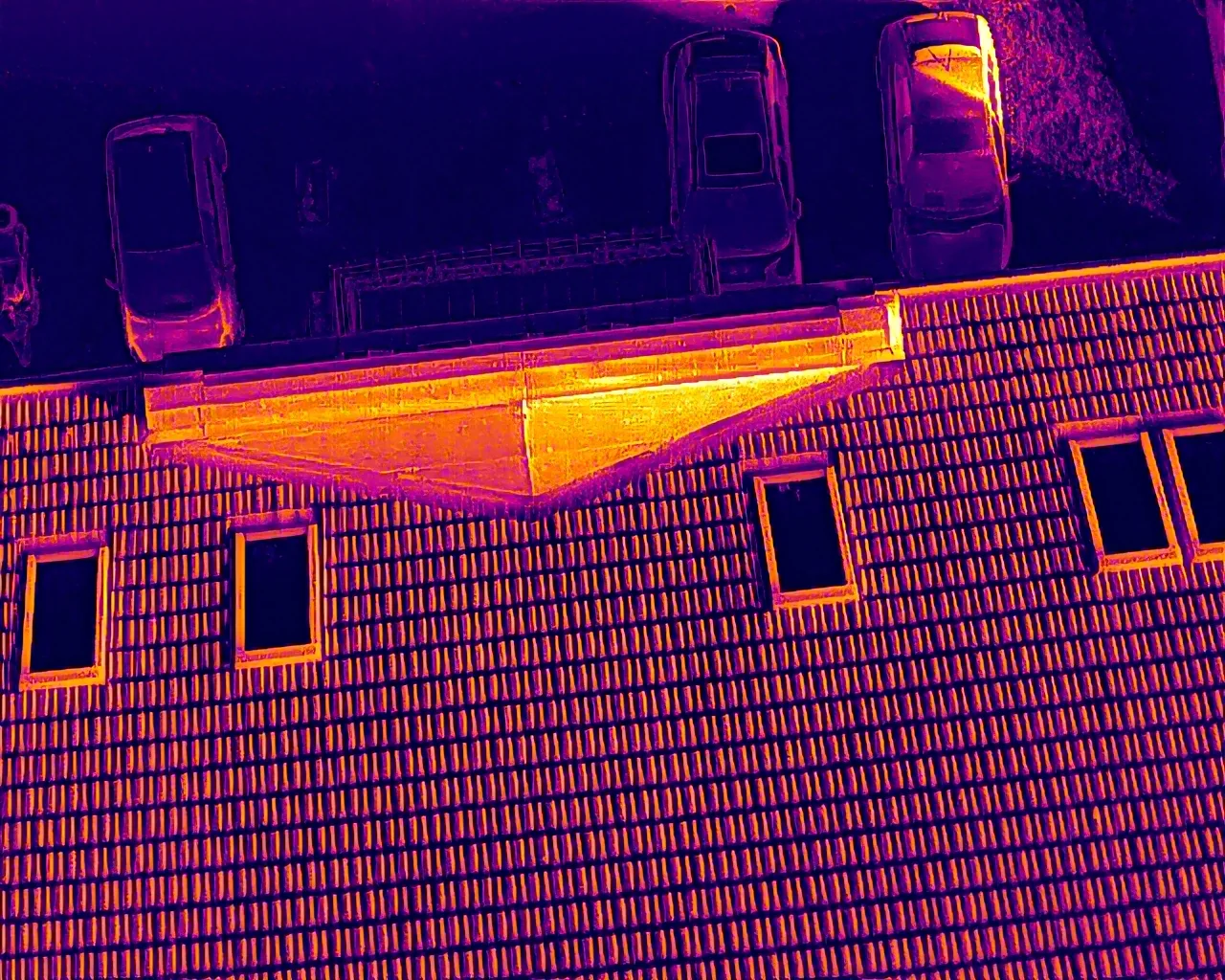 04 Application
Large roofs of halls, warehouses and shopping centres are inspected systematically, with a map of findings that makes it easier to plan maintenance and work by zone.
The quality of a thermal building inspection depends mostly on the survey conditions. That is why we choose the date based on the inspection goal, temperature difference, wind, precipitation and the position of the sun.
We ask for the address, type of building, photos or drawings and a description of the problem: high heating bills, damp patches, leaks or preparation for an energy renovation. The goal determines what we survey and when.
For heat loss we choose a date with enough difference between indoor and outdoor temperature and no direct sun on the facade. Before the flight we check the airspace, CCAA rules and site conditions.
We capture thermal and RGB records of all agreed surfaces, and suspicious spots from several angles to rule out reflections and transient effects.
We isolate anomalies, mark them on the building and describe them together with the survey conditions. The cause and the repair method are confirmed by a building specialist or contractor.
We carry out thermal building inspections in Zagreb, Zagreb County and across Croatia. For residential buildings, houses, commercial properties and halls we schedule the survey around the weather and the heating season. For an estimate, send the address, photos and a description of the problem.
We set the price once we know the size of the building, the inspection goal and the expected report. The quote states the scope of the survey and delivery before a date is agreed.
The price depends on the roof and facade area, the number of buildings, the complexity of the site, whether a special survey time is needed and the scope of the report. Travel costs and any regulatory procedures are listed separately.
Send the address or a map link, the type of building, the approximate area and a description of the problem. We will reply with a proposed date, survey method and quote items.
The answers describe the usual process. Exact feasibility depends on the building, weather, airspace and the inspection goal.
Send another questionHeat loss needs a clear difference between indoor and outdoor temperature, usually in the heating season, early in the morning or in the evening without direct sun on the facade. Moisture in a flat roof often shows best after a sunny day, while the roof cools down. We choose the date based on the goal of the inspection and the weather forecast.
A thermogram shows differences in surface temperature. They can point to thermal bridges, insufficient or damaged insulation, air leaks around windows and joints, moisture in roof layers or leak locations. An appropriate specialist confirms the cause by inspecting the building.
No. The camera records thermal radiation from the outer surface. What happens inside a wall or roof is visible only indirectly, through the temperature pattern on the surface, so we interpret the thermogram together with the construction and the survey conditions.
A drone covers the roof and the upper parts of the facade that cannot be seen from the ground or only at an unfavourable angle. For an energy audit or renovation it is often useful to combine the aerial survey with measurements from inside, which we agree with the client and the contractor.
The delivery contains thermal images with matching RGB frames, marked anomalies, a description of the survey conditions and an overview by part of the building. We agree the scope of the report in advance, based on who will use the findings.
EnergizeDrone, a brand of Energize Intelligent Solutions d.o.o. from Zagreb. Our team includes a specialist with the ITC Level I Infrared Thermography certification, and we inspect buildings in Zagreb and across Croatia.
Tell us the type and address of the building, the approximate roof or facade area and what you want to check, for example heat loss, moisture or leaks. Add photos or drawings and the contact of the person who manages the building. We will propose a date with suitable conditions and the form of the report.