


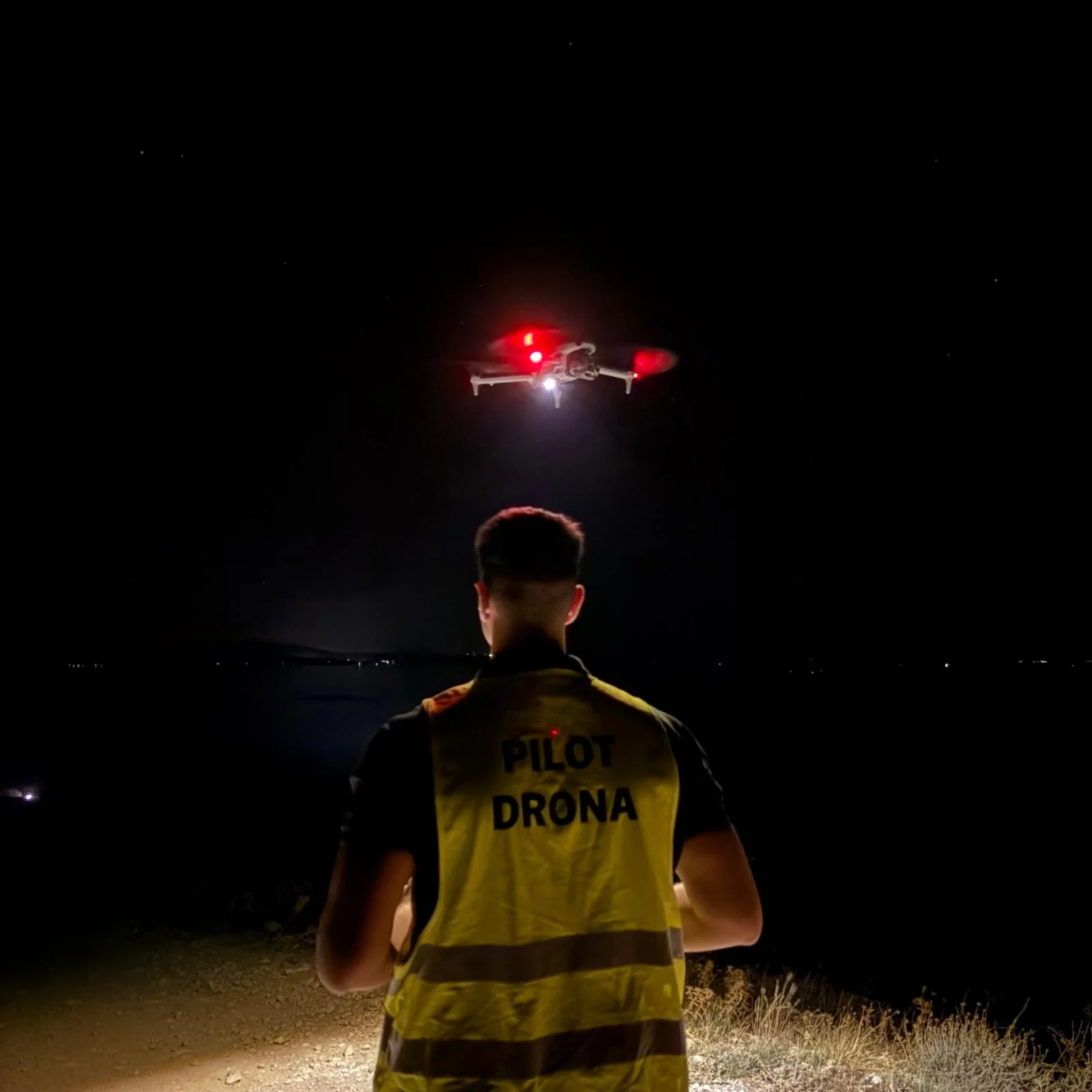
Before flying a drone in Croatia, it is not enough to ask whether a single permit exists. You need to establish which category the planned operation belongs to, whether the operator must register, what competence the remote pilot needs and whether there are special conditions for the chosen location. In Zagreb the last step is particularly important, because airspace conditions cannot be inferred from the name of the neighbourhood alone. This article provides a practical framework, but it is no substitute for checking the current rules and official maps immediately before a flight.
Important: regulations, geographical zones and operational conditions can change. Before every flight, check the current information from the Croatian Civil Aviation Agency (HACZ), Croatia Control (HKZP) and EASA.
What is actually meant by a “drone permit”
In everyday speech, the same word is used to describe different documents and procedures. Operator registration confirms who is responsible for operations. Proof of competence relates to the remote pilot’s knowledge. An operational authorisation relates to operations that go beyond the limits of the open category, while the conditions for using airspace depend on the specific geographical zone. In addition, filming and publishing material can raise questions of privacy, owners’ rights or other regulations that are not the same as flight safety rules.
That is why it is most useful to separate four questions: who manages the operation, who flies, how the flight is carried out and where it takes place. Only when all four answers are known can the necessary steps be assessed.
First determine the category of the planned operation
The European framework distinguishes the open, specific and certified categories according to the level of risk, not just according to whether the flight is a hobby or commercial. The open category covers a large number of lower-risk operations when all of its limitations are met. EASA lists, among other things, keeping the drone within visual line of sight, a general height limit and a ban on carrying dangerous goods and dropping material. The open category is divided into A1, A2 and A3, and the applicable subcategory depends on the drone’s class or characteristics and how it is operated in relation to people and the environment.
If the planned operation cannot remain within the limits of the open category, it may fall into the specific category. A different procedure then applies, for example an operational authorisation, a standard scenario or another appropriate framework. This is not determined by guesswork on site, but before the flight is contracted and carried out. An official overview of the category logic is available on EASA’s pages on the open category.
Operator registration is not the same as pilot competence
The operator can be a natural or legal person who organises the operation and is responsible for it, while the remote pilot is the person who flies. This can be the same person, but it does not have to be. Under EASA rules, the operator registers, and the registration number obtained is used on the drones it operates. The obligation to register depends on the characteristics of the aircraft and sensor; for example, a camera can matter even on a very light drone that is not a toy.
Pilot training is considered separately. Certain subcategories of the open category require appropriate theoretical knowledge or proof of competence, and the requirements depend on the drone class and the type of operation. Instead of relying on an old table from the internet, check the current HACZ guidance on flying drones or the official government page “I want to fly a drone – what do I need to do?”. If you want structured learning and practical preparation, see our drone pilot training.
Zagreb is not a single flight zone
It is not reliable to claim that the whole city is permitted or prohibited for flying. Conditions can depend on the exact coordinates, altitude, time, proximity to an airport or heliport, temporary restrictions and other elements of airspace management. Two places a few streets apart can have different operational conditions. That is why the answer is not found in a general list of neighbourhoods, but in the current official map for the specific location.
Croatia Control (HKZP) provides the AMC Portal and AMC Portal Mobile for information and procedures related to airspace use. Before the flight, enter the exact location and review the applicable conditions. If the map or procedure points to an additional action, it is completed before take-off. A screenshot from last month is not enough, because the situation can change.
Pre-flight checklist
- Define the operation. Write down the location, purpose, expected altitude, duration, flight path and type of capture.
- Check the category and subcategory. Compare the plan with current EASA and HACZ requirements and the drone’s characteristics.
- Confirm registration and competence. Check that the operator’s details are valid, the marking on the drone and the pilot’s required proof of competence.
- Open the official map. Check the geographical zone and current conditions for the exact coordinates and time.
- Assess the area on the ground. Plan take-off, landing, distances, access and what to do if people not involved in the operation appear.
- Check the weather and equipment. Wind, visibility, precipitation, batteries, firmware and return to a safe point are part of the decision to take off.
- Consider privacy and filming. A safe flight does not automatically mean every shot is permitted for every use or publication.
Does commercial filming change the flight category?
The mere fact that a service is paid does not automatically move the operation into the specific category. EASA states that commercial and other services can be carried out in the open category if all of its conditions are met. However, because of the location, aircraft, mode of operation or planned flight path, a project may require a different operational framework. In addition to aviation rules, professional filming must take into account the purpose of the material, privacy and other applicable obligations.
For a client it is therefore more useful to ask how the whole operation has been planned than just whether the pilot has a “permit”. A professional contractor should be able to explain the flight category, how the site is checked, the safety measures and what will be delivered. Our fleet of professional drones is chosen according to the task, but the equipment always comes after checking whether the plan can be carried out safely and legally.
When to involve a professional team
Help from an expert team is especially useful when a project involves an urban area, a technical sensor, larger infrastructure, multiple flights or a result that will be used by other specialists. Good preparation can reveal that the date, take-off position, survey scope or type of deliverable needs to change. This avoids arriving on site with a plan that cannot be carried out.
If you have the coordinates and the project goal, send them before a date is agreed. We can review the operational context, propose a suitable drone service and clearly separate what we can confirm from what needs to be checked with the competent authority.